product background
Ir directamente a la información del producto

Costa Rica

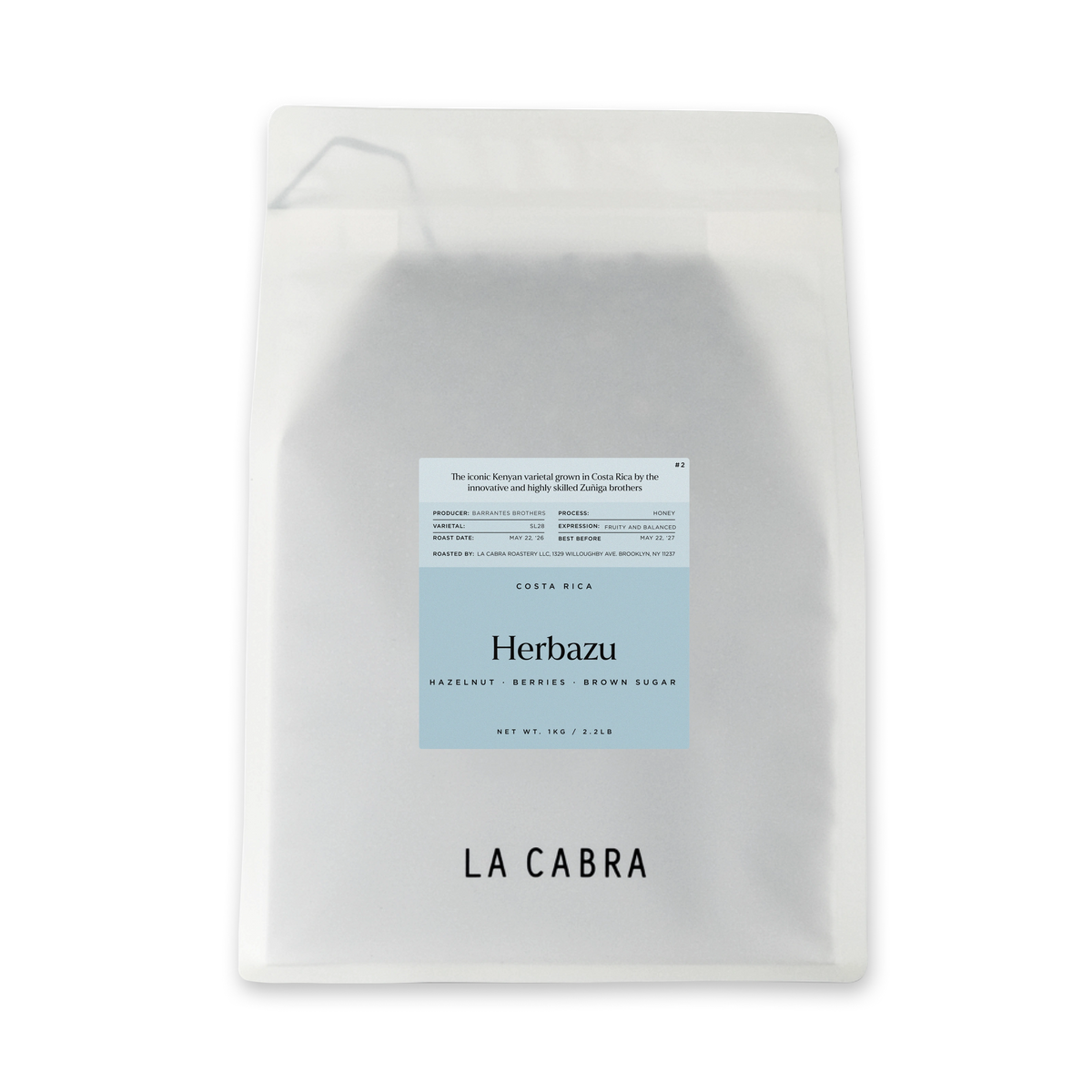
Herbazu

Herbazu

The iconic Kenyan varietal grown in Costa Rica by the innovative and highly skilled Zuñiga brothers.

Precio habitual $26.00 USD
$26.00 USD Precio habitual Precio de oferta
Variant

About

Coffee Expression This white honey lot is tasting typically fresh and bright, with the trademark berry notes backed up by a deep brown sugar sweetness and a rich hazelnut finish.

Producer Produced by the Barrantes Zuñiga brothers, some of the main drivers behind Costa Rica’s micro mill revolution.

Whole Bean Coffee / Both for filter and espresso

Technical Data

Producer Barrantes Brothers

Region West Valley

Altitude 1900 masl

Varietal SL28

Process Honey

Harvest February 2026

Brewing Advice

Water is one of the most critical components of an excellent coffee experience. We recommend using mineral water of a soft Total Dissolved Solids count, ideally below 150 ppm. 

Rested coffee During the resting process, harsh and astringent flavors, which can even be perceived as a ‘roast’ character, soften out, allowing a clearer and brighter expression of the coffee’s character to shine.  

We recommend resting our coffees for at least 10 days after the roast date, and we often find excellent results, especially for particularly dense coffees, beyond 6 weeks.

Brewing Our straightforward approach to coffee carries over into brewing. We recommend our roasted coffee for all brew methods, regardless of whether it is immersion, percolation or espresso. We believe that there is one correct way to roast a single coffee, roasting lightly, in such a way as to release its innate qualities and showcase its quality. Learn more about different brewing techniques and specific brew guides here.

Shipping & Delivery

· Free shipping above $79 and on all subscription orders

· Ships within 1-3 days from Brooklyn, New York

· More info

Ver todos los detalles

Herbazu

We first visited the Herbazu micro-mill in March 2015, during only our second ever trip to Costa Rica. The name Herbazu comes from the family name of the brothers who own the mill, Los Hermanos Barrantes Zuñiga. During our first trip we were very impressed by the brothers’ dedication, and incredibly high levels of quality control and sorting. However, what also intrigued us was their experimentation with alternative varietals. We tasted a small lot of SL28 that had been produced at the farm, that to us, was the cleanest representation of the varietal that we had ever tasted grown outside of Kenya. We have often found that SL28 lots don’t deliver on their promise of clean Kenya-like acidity and syrupy sweetness, but this ticked all of those boxes. That lot went on to win the 2015 Costa Rica Cup of Excellence, but due to the popularity and rarity of these lots, it took us several years to bring some Herbazu SL28 back to Denmark.

This year marks the sixth time we have managed to secure a small lot of Herbazu’s crisp and juicy SL28. While SL28 grown outside Kenya has become more popular in the intervening years, this is one lot we keep coming back to. This white honey lot is tasting typically fresh and bright, with the trademark berry notes backed up by a deep brown sugar sweetness and a rich hazelnut finish.

Due to the notoriety of these SL28 lots, the Zuñiga brothers are slowly converting more of their approximately 45 hectares of land to grow SL28. The varietal requires specific conditions, so small trials are undertaken constantly to find the ideal spot on each miniature farm to plant. While still 80% Villa Sarchi, a very typical high quality Costa Rican varietal, SL28 now takes up 10% of the total area, with the remaining 10% made up of experimental plots of varietals such as Ethiopian heirloom, a Rwandan bourbon strain, Geisha and Typica.

Costa Rica

We buy coffees from a long spine of Costa Rica, running through the country’s capital San José. This spine is famous for high quality coffee production the world over, resulting in high prices for farmers. One of the reasons for this is plentiful high altitude, the Talamanca Sierra runs through the region, with peaks of above 3000 masl. The main spine is split into 3 regions, the West Valley and Central Valley to the north of San José, and Tarrazú to the south. This year, we have also purchased from the Chirripó region for the first time, Tarrazú’s neighbour to the south, and home to Costa Rica’s highest point. In all of these areas, but especially in Tarrazú, agriculture and coffee growing is a main employer, vital to the economy. In fact, the population of Tarrazú is multiplied by three during harvest season, when workers flock to the region for the high wages paid to skilled pickers. The entire spine is mainly of volcanic origin, helping to provide fertile soils conducive to the production of consistently high scoring coffees, which we keep going back for.

You might also like